> For the complete documentation index, see [llms.txt](https://manual.firstresonance.io/llms.txt). Markdown versions of documentation pages are available by appending `.md` to page URLs; this page is available as [Markdown](https://manual.firstresonance.io/workflow-builder/first-resonance-ion-component/using-the-first-resonance-ion-component.md).
# Using the First Resonance ION Component
How to use the First Resonance ION component
The `First Resonance ION` component requires you to configure 2 settings:
1. Connection
2. GraphQL Query
There is also an optional third setting, GraphQL Variables, that can be used to pass variables to the query.
## Connection
Upon the first usage of the `First Resonance ION` component in a flow, you will need to configure the connection.
Click on the `+ Add Connection` button:
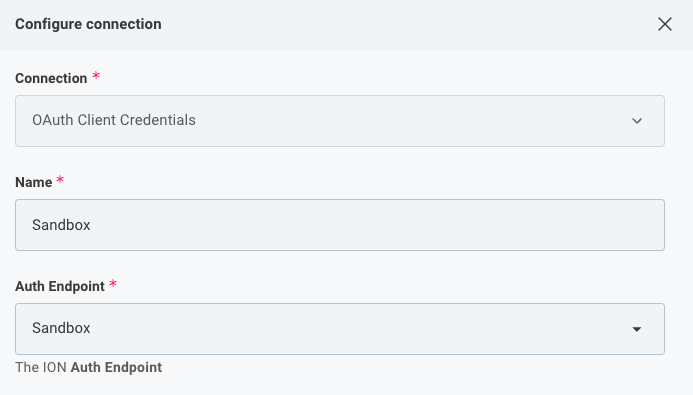
Enter in a name for the connection and select the Auth Endpoint (environment):
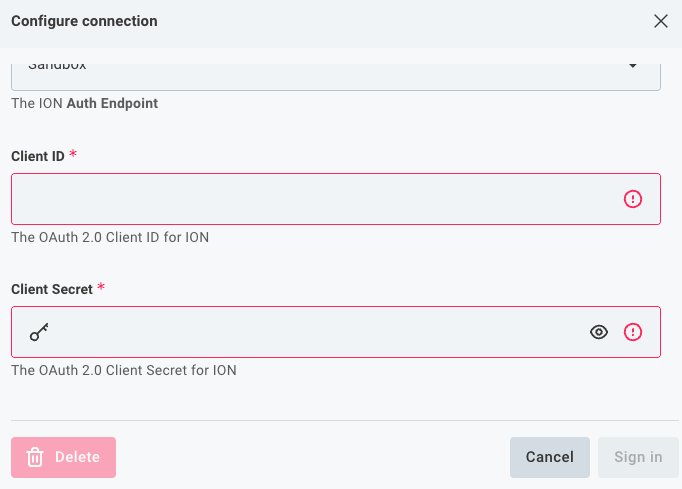
Scroll down on the window and enter in the Client ID and Client Secret. Refer to this [page](/api/api-keys.md) on how to retrieve a client id and secret then click on the Sign in button.
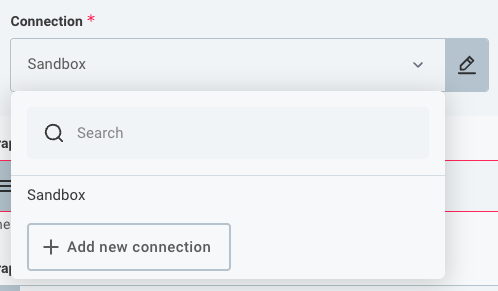
In subsequent usages of the `First Resonance ION` component within the flow, you will be able to select the connection from the dropdown.
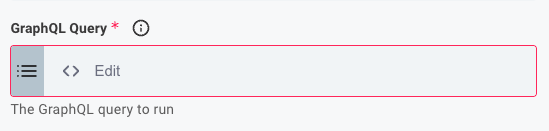
## GraphQL Query
Click on the E`dit` link to enter in a valid GraphQL query/mutation.
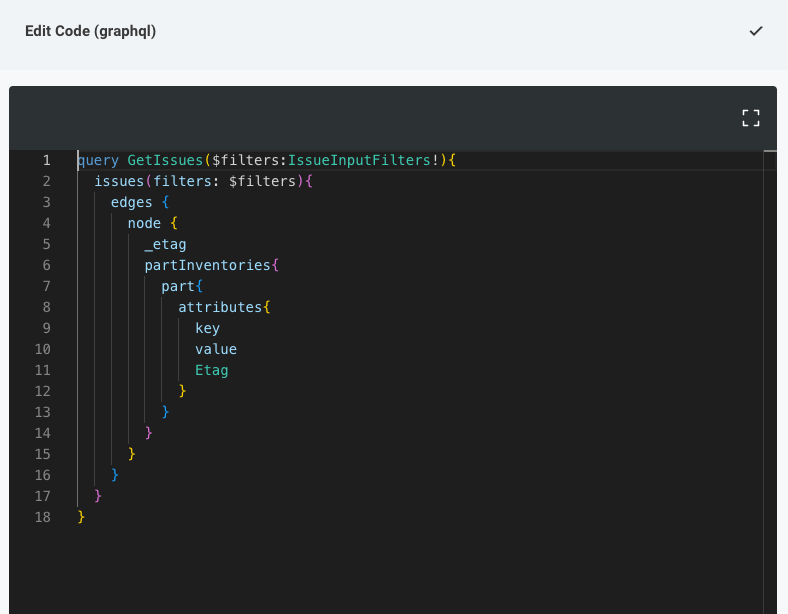
### Example Query
Here is an example GraphQL query to get issues and their related part inventories:
See [below](#example-query-1) for the example query variables.
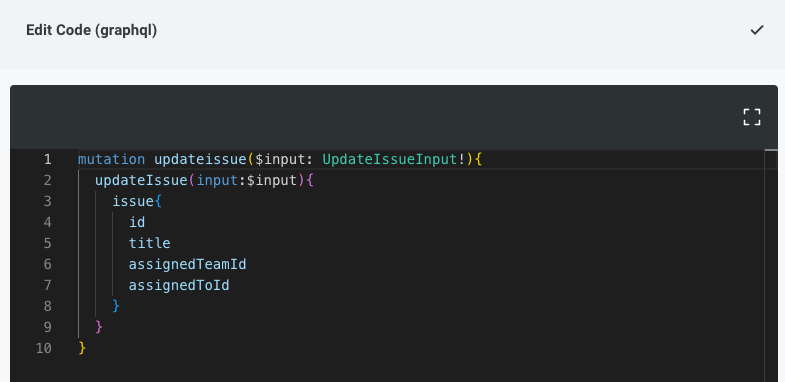
### Example Mutation
Here is an example GraphQL mutation to update an issue:
See [below](#example-mutation-1) for the example query variables.
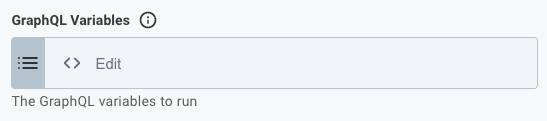
## GraphQL Variables
Click on the `Edit` link to enter any GraphQL variables that your query/mutation requires.
### Example Variables
Here is how to setup the variables for the query:
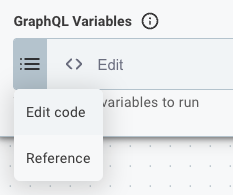
Click on the hamburger icon to the left of the `Edit` link to expose the sub-menu then select `Reference`.
Enter the following json into the field:
```json
{
"filters": {
"id": {"eq": }
}
}
```
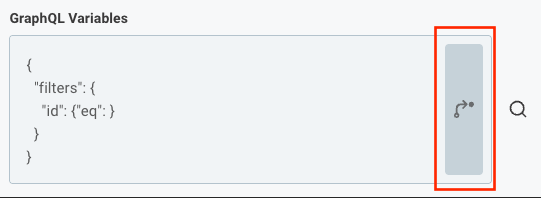
Place the cursor after the `"eq":` then click the button to the right of the field.
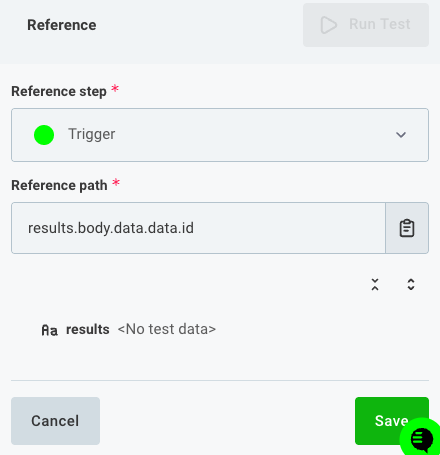
Select the reference step and the Reference path. In this example we are dynamically pulling in the id that is passed to the webhook and that id will be used to filter for a specific issue.
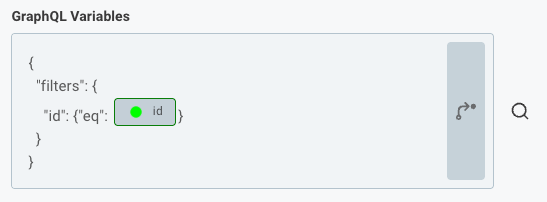
Once you have configured the reference the query variables should look like this:
---
# Agent Instructions
This documentation is published with GitBook. GitBook is the documentation platform designed so that both humans and AI agents can read, navigate, and reason over technical content effectively. Learn more at gitbook.com.
## Querying This Documentation
If you need additional information that is not directly available in this page, you can query the documentation by asking a question.
Perform an HTTP GET request on the following URL with the `ask` and `goal` query parameters:
```
GET https://manual.firstresonance.io/workflow-builder/first-resonance-ion-component/using-the-first-resonance-ion-component.md?ask=&goal=
```
`ask` is the immediate question: it should be specific, self-contained, and written in natural language.
`goal` is what the user is ultimately trying to achieve, the reason they need the answer. Sharing it helps GitBook give you a better, more relevant answer. A goal is most helpful when it describes the outcome the user wants rather than restating the question. For example, with `ask=how do I create an API token`, a goal like `automate deployments from our CI pipeline` lets GitBook tailor the answer to that use case.
The response will contain a direct answer to the question and relevant excerpts and sources from the documentation.
Use this mechanism when the answer is not explicitly present in the current page, you need clarification or additional context, or you want to retrieve related documentation sections.